A Yard You'll Love Coming Home To
We design, build and maintain beautiful outdoor spaces.





Commercial Turf Installation
Professional Synthetic Grass Services
Commercial Turf Installation Omaha
Professional Synthetic Grass for Your Business
When you run a business in Omaha, your outdoor spaces matter. Customers notice brown patches in front of your office. Employees see the mud tracked through your entrance after every rain. Property managers deal with constant maintenance bills for irrigation and mowing. That's where commercial turf installation comes in.
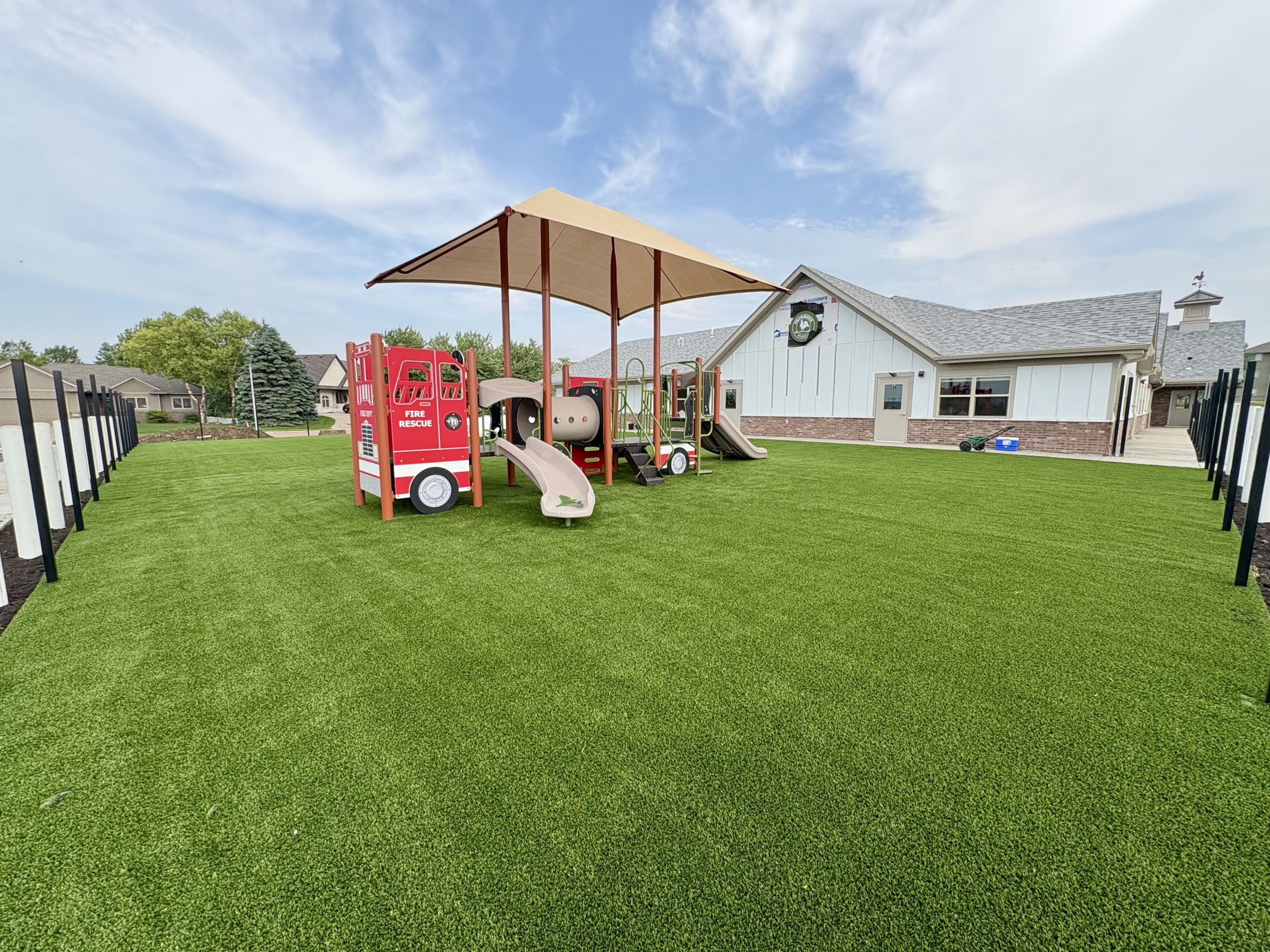
We've installed synthetic turf across Omaha for over a decade—from the Old Market district to West Omaha business parks. Our commercial clients include office buildings, shopping centers, daycare facilities, and apartment complexes. They choose artificial turf because it stays green through Nebraska's harsh winters and scorching summers, needs zero watering during our frequent droughts, and cuts maintenance costs by thousands each year.
Commercial turf has changed a lot since the stiff, plasticky surfaces you might remember. Today's products look natural, feel comfortable underfoot, and last 15-20 years with minimal care. The investment pays for itself faster than most business owners expect.
Sports Field Turf Installation
High schools and colleges across Omaha face the same challenge every fall: maintaining natural grass fields through heavy use. Football teams practice daily. Soccer teams share the same space. By October, many fields are more dirt than grass. Rain turns them into mud pits that cancel games and practices.
Sports field turf solves this. We install professional-grade synthetic surfaces designed specifically for athletic use. These aren't your basic lawn products—they're engineered with proper padding systems, drainage layers, and fiber types that meet safety standards for competitive play.
Installation Process for Commercial Projects
Site preparation starts every project. We remove existing grass, weeds, and debris down to soil level. Then we grade the area for proper water flow. Omaha's clay soil makes this step critical. Without correct grading, water pools on your turf after storms.
Base material installation comes next. We lay crushed stone in a compacted layer that creates drainage and prevents ground shifting. Many installers skip this or use inferior materials. That's why their installations fail when Nebraska weather hits.
The turf we install matches your specific needs. Residential lawns get longer, softer blades that feel natural underfoot. Athletic fields get shorter, more resilient fibers that handle cleats and heavy traffic. Dog areas get antimicrobial infill that prevents odors.
Infill material goes between the turf blades. This adds weight, helps blades stand upright, and improves drainage. We use silica sand for most applications. Pet areas get specialized antimicrobial infill.
Edge securing prevents the most common failure point. We use landscape staples every 3-6 inches around the perimeter. Cheap installations space them 12 inches apart—that's when edges start lifting after a year.
Seam work requires precision. Poor seam placement becomes obvious as turf settles. We use specialized adhesives and seaming tape that holds up through temperature extremes and ground movement.
Final brushing brings the blades upright and distributes infill evenly. This creates the finished appearance and proper performance characteristics.
Our artificial turf installation in Omaha NE typically takes 2-5 days depending on project size. We work year-round, though spring and fall offer ideal conditions for base preparation and material handling.
Residential Turf Installation
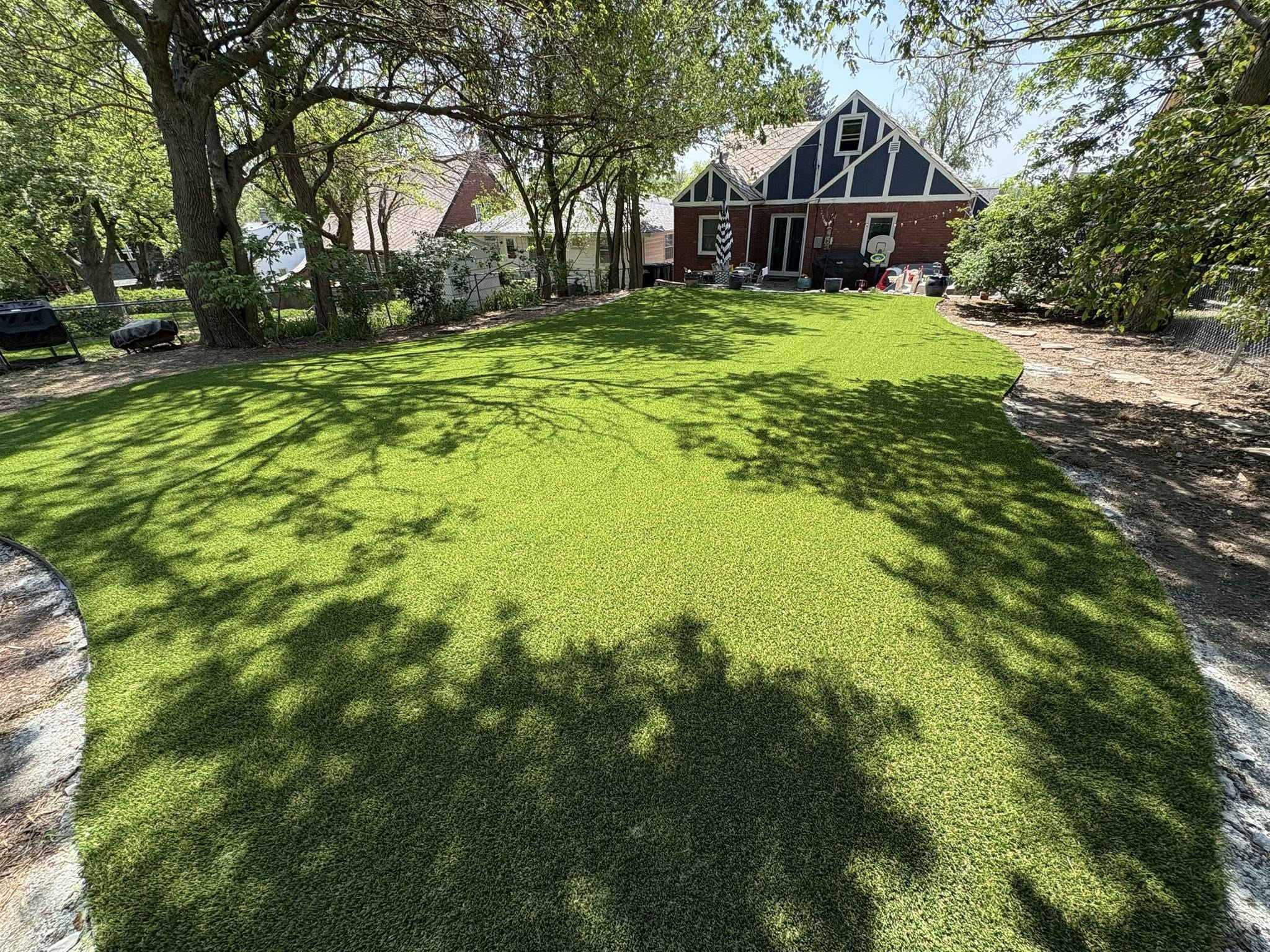
Homeowners in Dundee, Aksarben Village, and throughout Omaha neighborhoods are tired of fighting with their lawns. Nebraska weather makes grass maintenance frustrating. Spring flooding drowns roots. Summer heat burns patches brown. Fall brings constant leaf cleanup. Winter freeze-thaw cycles create dead spots.
Residential turf installation gives you a yard that looks magazine-ready every single day. No mowing on Saturday mornings. No fertilizing or dealing with chemicals around kids and pets. No brown spots from dog urine. No muddy paws tracking through your house when it rains.
The turf we install in residential yards uses softer fibers than commercial products. It feels good when kids play barefoot. Pets love it because it stays cool and doesn't get muddy. Your water bill drops significantly—Omaha residents typically use 30-50% of their water on lawn irrigation during summer.
Where You Can Use Our Turf
Athletic Field Renovation
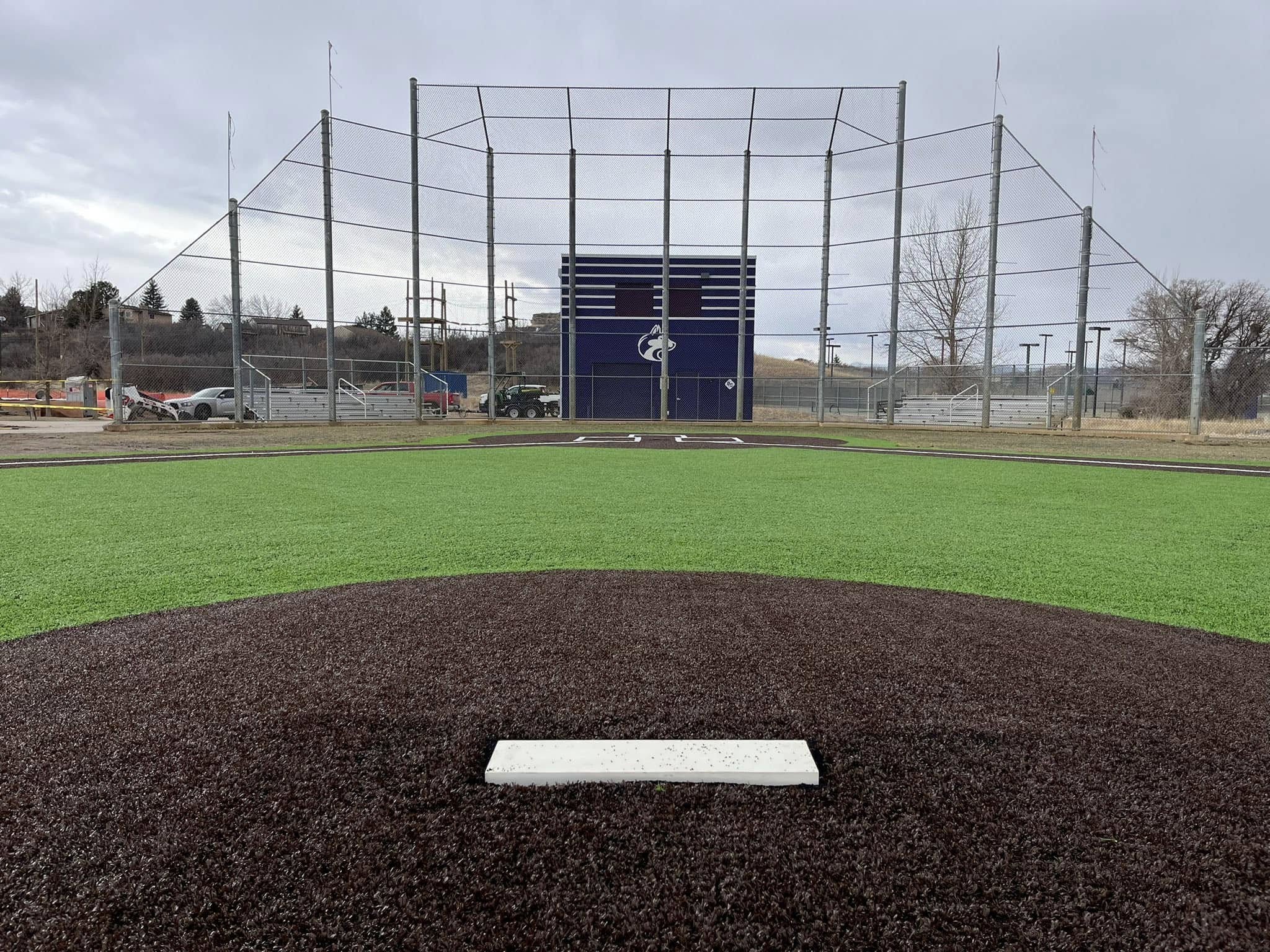
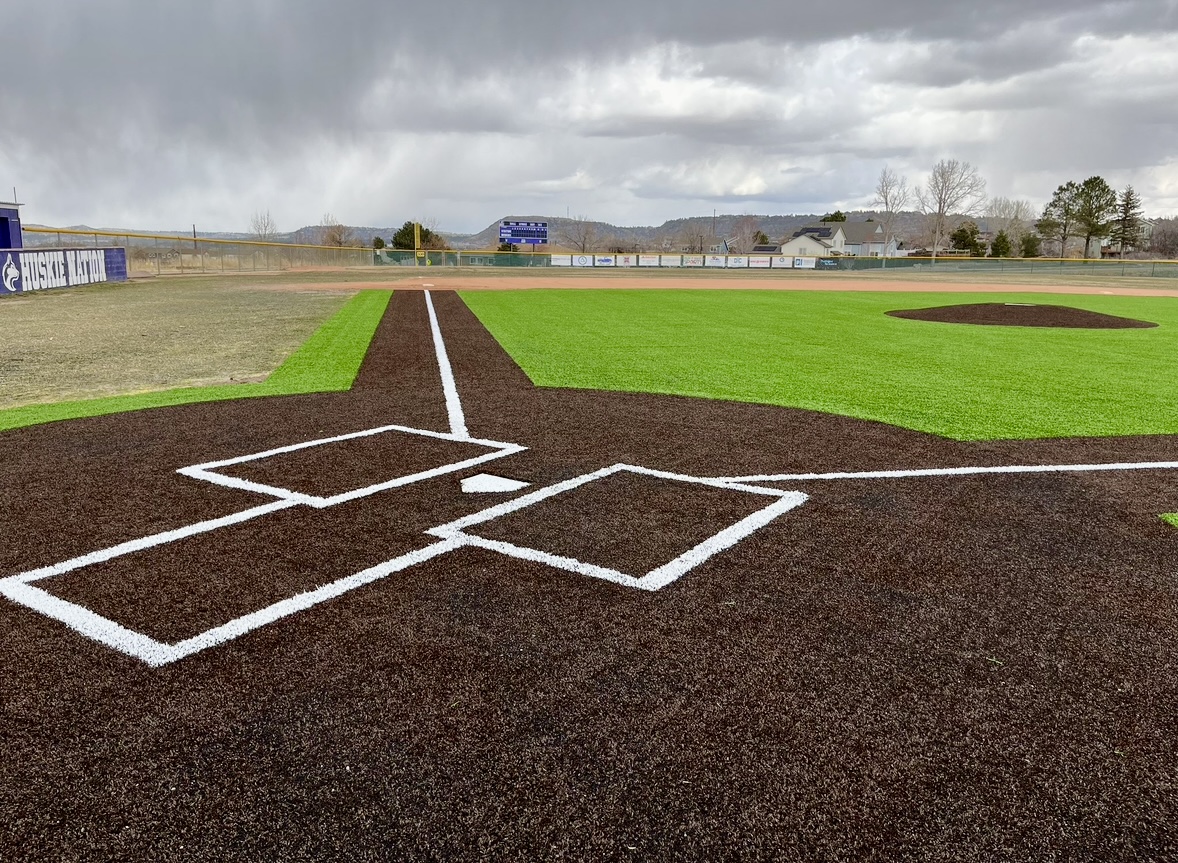
Existing sports facilities don't always need complete replacement. Sometimes the infrastructure is solid, but the playing surface has worn out. Athletic field renovation lets you upgrade the turf itself while keeping drainage systems, borders, and base layers intact.
We renovate fields for parks, private schools, and recreation centers around Omaha. The process takes less time than full installation because we're working with existing groundwork. Most renovation projects finish in 2-3 weeks instead of 4-6 weeks for new construction.
Timing matters for renovations. We typically schedule these projects during off-seasons so teams don't lose practice time. Baseball fields get renovated in fall and winter. Football fields get attention in late spring. Soccer facilities have more flexibility depending on league schedules.
Sports Field Resurfacing
Even the best synthetic turf eventually wears down. Heavily-used areas develop lower pile height. Infill material settles or migrates. UV exposure gradually degrades fibers. Sports field resurfacing addresses these issues without tearing out the entire system.
Resurfacing replaces the top turf layer while preserving the base, padding, and drainage infrastructure. It costs about 60% less than complete replacement and extends your field's life by another 10-15 years. Most Omaha facilities resurface every 8-10 years depending on usage levels.
We assess fields to determine if resurfacing makes sense or if full replacement is necessary. Factors include base condition, drainage performance, and padding integrity. Sometimes we recommend targeted repairs for goal areas or high-traffic zones rather than resurfacing the entire field.
Why Omaha Businesses Choose Synthetic Turf
Our climate challenges natural grass. July temperatures regularly hit 95+ degrees with minimal rain. January brings subzero cold and ice storms. Spring flooding saturates soil. These extremes make grass maintenance expensive and often unsuccessful.
Commercial properties save money multiple ways with turf. No weekly mowing service at $200-400 monthly. No irrigation system repairs that cost thousands. No fertilizer applications four times yearly. No reseeding bare patches every spring. Most commercial clients recover their investment within 4-6 years through eliminated maintenance costs.
Appearance matters for businesses. First impressions happen at your entrance. Synthetic turf stays uniformly green when competitors have brown lawns during drought. It looks professionally maintained even though you're not spending money on maintenance. For retail locations, apartments, and office buildings, this consistent appearance improves property value and tenant satisfaction.
Maintenance Requirements
Commercial turf isn't maintenance-free, but it's incredibly low-maintenance compared to natural grass. Quarterly brushing keeps fibers upright. Monthly debris removal prevents organic buildup. Annual infill top-up replaces material that settles over time. Total annual maintenance typically costs under $500 for average commercial properties.
Athletic fields need more frequent care. Weekly brushing prevents compaction in high-use areas. Monthly grooming redistributes infill material. Quarterly deep cleaning removes dirt and debris. Even with this increased maintenance, sports facilities spend 80% less than they would maintaining natural grass fields.
Pet facilities require antimicrobial treatments every few months. We install turf with special drainage backing that prevents odor accumulation. Regular hosing removes waste residue. For dog parks and pet relief areas, proper backing and routine cleaning keeps spaces hygienic and odor-free.
200+ Projects Completed
200+ Satisfied Customers
20+ Years of Experience
Additional Uses for Commercial Turf
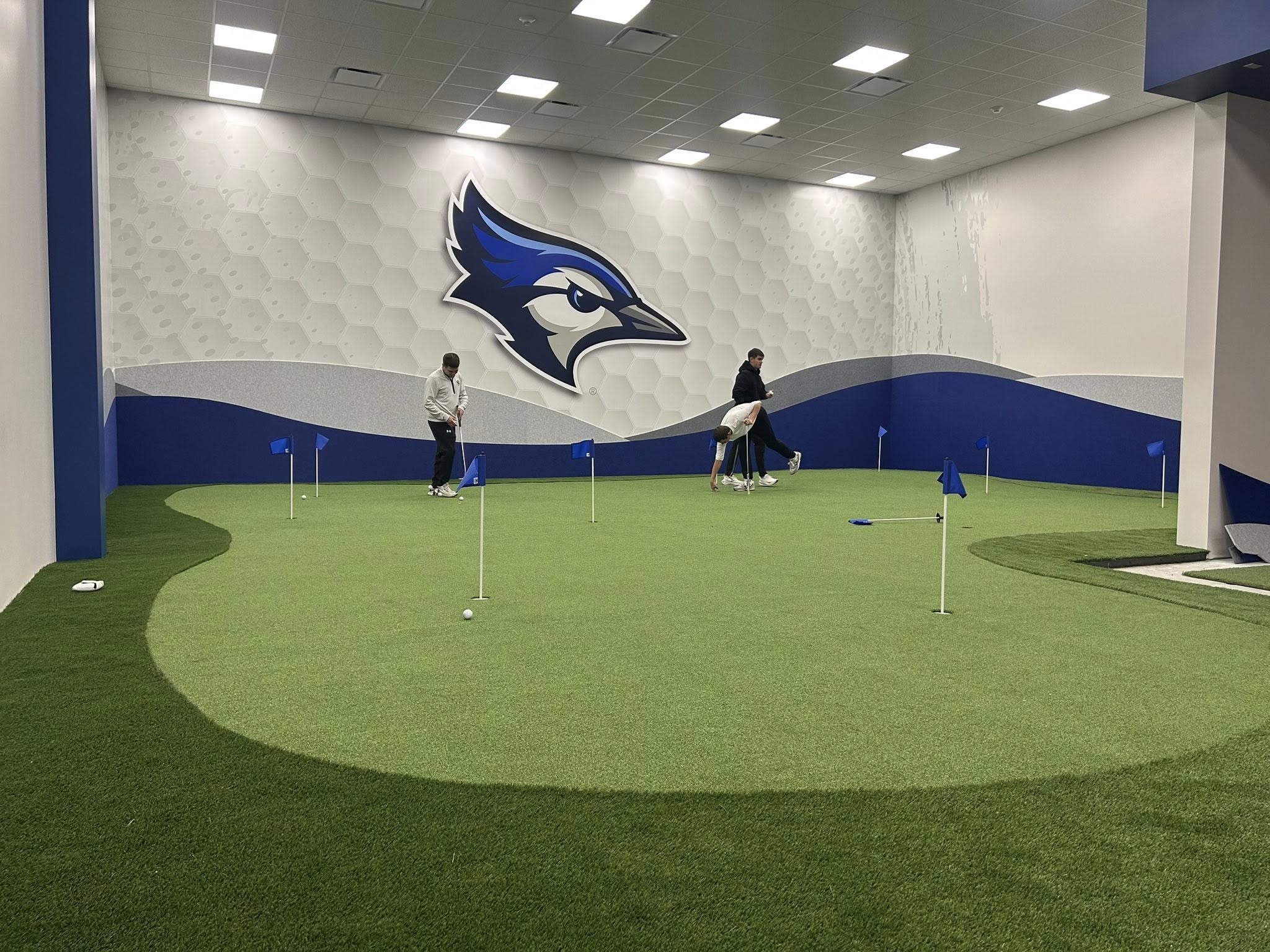
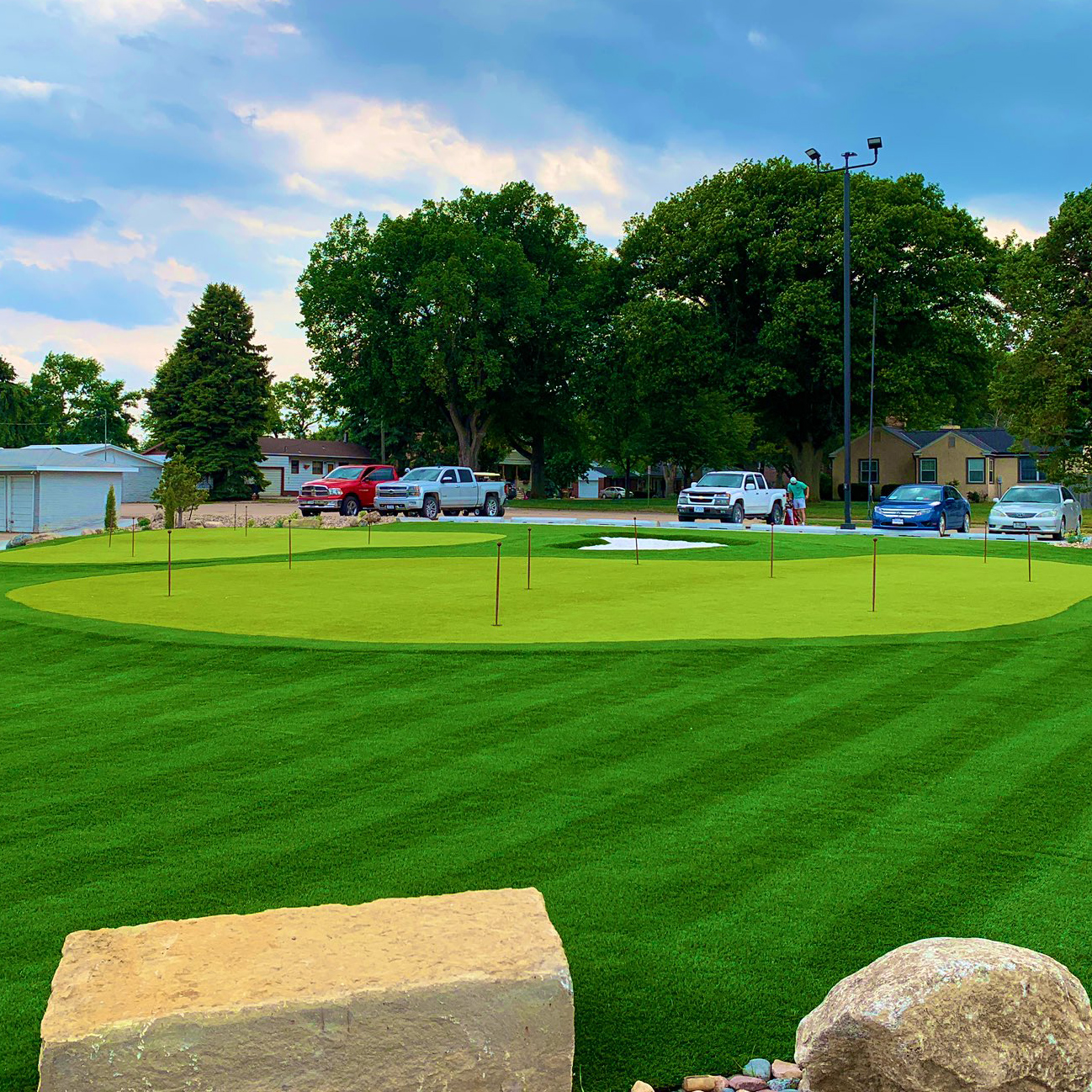
From backyards to ball fields, we’ve been busy building game-ready spaces across Nebraska and the entire midwest. Below you’ll find a selection of our recent work — including residential turf installs, putting greens, playgrounds, sports fields, and more.
Whether you’re looking for ideas or want to see the quality of our work up close, this is a great place to start.
Ready to kick off your project?
Choosing the Right Turf Product
Not all synthetic turf works for every application. Face weight, pile height, backing type, and fiber material all affect performance. Office landscapes might use 1.5-inch pile height with lighter face weight. Sports fields need shorter, denser fibers with heavy-duty backing.
We guide clients through product selection based on actual use. High foot traffic areas get more durable fibers. Spaces where people sit or walk barefoot get softer products. Shaded areas need UV-resistant materials even though they're not in direct sun—Omaha's intense summer light reflects off nearby surfaces.
Drainage capacity matters in our climate. Spring storms can dump 3-4 inches of rain in hours. Sports fields need drainage rates of 30+ inches per hour. Commercial landscapes can use products with lower drainage rates, but we never install anything below 20 inches per hour drainage capacity.
Frequently Asked Questions
What services do you offer?
We provide lawn care, garden design, maintenance, irrigation, tree trimming, and hardscaping.

How much will my landscaping project cost?
Costs depend on the size and complexity of the project. We offer free estimates based on your needs.
How often should I schedule maintenance?
Typically, lawn and garden maintenance is done every 1-2 weeks during the growing season, but we can customize a schedule for you.
Do you provide custom landscape designs?
Yes! We create personalized designs that match your style and needs.
What is the best way to water my lawn and plants?
We recommend installing an irrigation system and following proper watering practices based on your plants and soil. We can guide you on the best approach.
Local Project Experience
We've completed commercial turf installation across Omaha's diverse landscape. Downtown office buildings with rooftop turf areas. West Omaha daycare centers with play surfaces. Bellevue sports complexes with multiple fields. Each project teaches us something about what works in Nebraska weather.
The Children's Hospital courtyard project required turf that could handle constant use by kids of all ages while looking natural from patient room windows. We installed a multi-colored product that mimics real grass variation and includes extra padding for safety.
Ak-Sar-Ben Village commercial spaces presented drainage challenges because of existing infrastructure. We designed custom solutions that integrate with underground systems while maintaining the aesthetic requirements of a high-end development.
Getting Started with Your Project
Commercial turf installation projects typically take 4-8 weeks from initial consultation to completion. Timeline depends on project size, weather conditions, and site complexity. We schedule around your business needs—many projects happen during off-hours or slower seasons to minimize disruption.
Budget planning should account for site preparation, turf material, installation labor, and any special features like logos or line markings for sports fields. We provide detailed estimates that break down costs so you understand exactly where your investment goes.
The best time to start planning is now. Spring and fall are our busiest seasons because weather cooperates. Summer heat makes installation more challenging. Winter freezing stops work completely. Early planning ensures we can schedule your project when you need it completed.
COMPANY
CUSTOMER CARE
LEGAL
FOLLOW US


© Copyright 2026. ProGame Turf and Recreation. All Rights Reserved.